

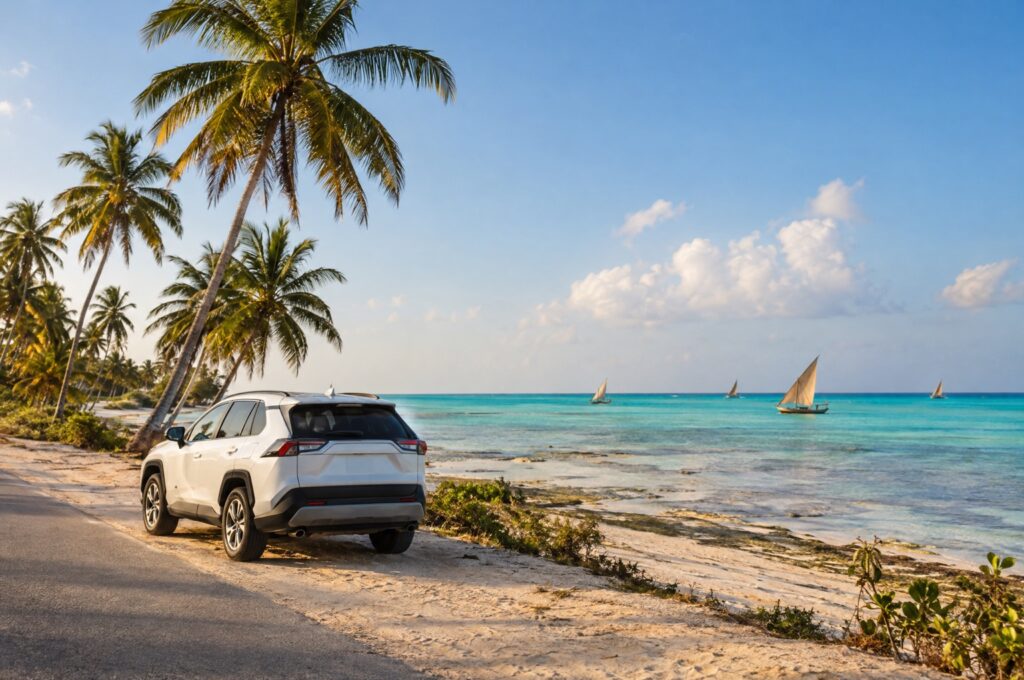
The short answer: the best time to visit Zanzibar is June to October, when the island is dry, sunny and a little cooler, with a second good window from late December to February, when it is hot and mostly dry. The months to think twice about are April and May, the heart of the long rains. November brings short, lighter showers that rarely spoil a trip.
That is the beach-holiday answer. If you are planning to drive yourself around the island, the seasons matter in a few extra ways: which roads stay easy, which car to pick, and when rental cars get booked out. This guide covers both, month by month.
Zanzibar’s Seasons at a Glance
Zanzibar sits just six degrees south of the equator, so it is warm all year. Daytime highs stay roughly between 28°C and 33°C and the sea never drops much below 25°C. What changes through the year is the rain and the wind, which locals divide into four seasons:
| Season | Months | Weather | Crowds | For drivers |
|---|---|---|---|---|
| Long dry season | June to October | Sunny, low humidity, breezy on the east coast | High, peaking in July and August | Easiest driving of the year; book your car early |
| Short rains (vuli) | November to mid-December | Short showers, often in the afternoon | Moderate | Very manageable; good value month |
| Short dry season | Late December to February | Hot, humid, mostly dry | High over Christmas and New Year | Book well ahead for the festive weeks |
| Long rains (masika) | March to May | Heavy downpours, wettest in April | Low | Slower roads; choose an SUV, avoid scooters |
One thing that does not change: the length of the day. Because Zanzibar is so close to the equator, the sun rises around 6:00 to 6:30 and sets around 18:00 to 18:45 all year. That gives you roughly twelve hours of daylight for exploring in any month, which is worth remembering when you plan a long day trip.
Zanzibar Month by Month
January
Hot, humid and mostly dry, with the occasional brief shower. The sea is warm and calm on the west coast, which makes Nungwi and Kendwa especially good. After the New Year rush clears in the first week, January is one of the best-value months of the high season. 12 January is Zanzibar Revolution Day, a public holiday, so expect some offices to close.
February
Usually the driest and hottest month of the short dry season. It is a great time for beaches and snorkelling. In 2027, Ramadan is expected to begin around 8 February. Visiting during Ramadan is perfectly fine, but daily life changes on the island, which we cover below.
March
The long rains usually arrive during March, though the first half of the month can still be dry. The sea is at its warmest. Ramadan is expected to end around 9 March 2027, followed by the Eid celebrations. The Sauti za Busara music festival takes place in Stone Town from 19 to 21 March 2027, one of the biggest cultural events on the East African calendar.
April
The wettest month of the year. Rain tends to come in heavy bursts, often in the afternoon, with sunny spells in between, so it is rarely a total washout. Some east-coast lodges close for a few weeks, and the island is at its quietest. It suits travellers who want low prices and empty beaches and don’t mind changing plans around the weather.
May
Still rainy, but the showers ease off as the month goes on, and the island turns a deep green. Late May can be a smart compromise: shoulder-season prices with improving weather.
June
The dry season begins. The southeast trade wind, known locally as the kusi, picks up, which makes the east coast breezy and brings the kitesurfers to Paje. Temperatures are pleasant rather than sweltering. June is one of the best months overall: dry weather, without the July and August crowds.
July
Dry, sunny and the coolest month, with comfortable days in the high twenties. European summer holidays begin, so demand rises quickly. The Zanzibar International Film Festival usually runs in Stone Town in late June or early July, and the Mwaka Kogwa festival, the traditional Shirazi new year, is usually held in Makunduchi in the south of the island in late July. Exact dates change each year, so check closer to your trip.
August
Peak season. The weather is reliably dry and the sea is at its coolest, around 25°C, which still feels warm to most visitors. Hotels in Nungwi and Paje fill up, and this is the month when rental cars, especially the popular SUVs, are hardest to find at short notice. Humpback whales pass Zanzibar between roughly July and October, so a boat trip may bring a sighting.
September
Still dry and sunny, but noticeably calmer once the August holidays end. September is our pick for travellers who want dry-season weather with fewer people. The trade winds keep the east coast fresh.
October
The end of the dry season. It gets warmer again, the wind drops, and underwater visibility is usually excellent, which makes October a favourite month for divers and snorkellers. A few showers may appear towards the end of the month.
November
The short rains, or vuli, arrive. Showers are usually short and lighter than the spring rains, often clearing within an hour or two. November is a quieter shoulder month with good availability and plenty of sunshine between the showers.
December
The first half of December can still see some short rain. From around the 20th the island fills up fast for Christmas and New Year, which is the busiest stretch of the whole year. If you are travelling over the festive period, book flights, accommodation and your car as early as you can.
The Best Time for What You Want to Do
- Beach holiday: June to October, or January and February. See our guide to the best beaches in Zanzibar and how to reach them by car.
- Kitesurfing in Paje: June to September for the stronger kusi wind, and December to February for the lighter kaskazi wind. April and May are the least reliable.
- Diving and snorkelling: October to March, when the water is warmest and visibility is often at its best.
- Dolphins at Kizimkazi: possible all year, and calmer seas make the dry season easiest for boat trips.
- A road trip around the island: June to October, when every road is at its best and you can drive from Nungwi in the north to Kizimkazi in the south without a thought for the weather. Our list of the top 10 places to visit in Zanzibar by car is a good place to start.
- Lowest prices and fewest people: April, May and November, if you are flexible about the weather.
What Each Season Means for Driving in Zanzibar
Most guides stop at the weather. If you are renting a car, here is what actually changes on the road.
Dry season: June to October and late December to February
This is the easiest time to drive. The main paved roads, such as the route from Zanzibar Town north to Nungwi, are in their best condition, and the sandy tracks down to beach lodges on the east and south coasts are firm and dry. Any car in our fleet will do the job, including a compact like the Toyota Ractic or a scooter for short hops. The only downsides are dust on unpaved roads and more traffic around Stone Town and the airport.
Rainy season: March to May, and November
Driving is still very doable in the rains, but it takes more care and a little more time:
- Heavy downpours cut visibility and leave standing water that can hide potholes. Slow down, and if a storm is very heavy, pull over and wait. Most pass within an hour.
- Unpaved roads turn muddy. Secondary roads in the east and south, and many access tracks to beach hotels, can get slippery. A car with more ground clearance, such as the Toyota RAV4 or the Land Cruiser Prado, makes life much easier.
- Low-lying streets can flood briefly in and around Zanzibar Town after a big storm. Give it time to drain rather than driving through deep water.
- Skip the scooter in April and May. Two wheels on wet, sandy roads is not much fun, and you will get soaked.
- Plan long drives for the morning. Rain often falls in the afternoon, so set off early and aim to be at your destination by mid-afternoon.
Whatever the season, try to finish your driving before dark. With sunset around 18:30 all year, that is easy to plan for. Our self-drive guide covers road conditions, driving on the left and insurance in more detail. And don’t forget that every foreign driver needs a Zanzibar Tourist Driving Permit, whatever the time of year.
Driving during Ramadan
Zanzibar is a predominantly Muslim island, and during Ramadan many people fast from dawn to sunset. Tourist areas carry on as normal, but some local restaurants close during the day, and the island is quieter in the afternoon. Traffic picks up just before sunset as people head home to break the fast, so allow extra time on the roads around then. It is respectful to dress modestly in Stone Town and in villages, and to avoid eating or drinking in public on the street during daylight hours.
When to Book Your Rental Car
Two periods put real pressure on the island’s rental fleet: July and August, and the last two weeks of December into early January. In those weeks the most popular cars, the RAV4s and the larger SUVs, are often fully booked well in advance. If your dates fall in either window, reserve your car as soon as your flights are confirmed. The rest of the year, a week or two ahead is usually enough.
Booking early costs you nothing up front with us, as there is no advance payment: you pay when you arrive. For a full picture of daily rates and what a week on the island really costs, see our Zanzibar car rental cost guide. If you would rather not drive at all, especially in the rainy months, our chauffeur service puts a local driver behind the wheel.
Key Dates for 2027
| Event | When | Good to know |
|---|---|---|
| Zanzibar Revolution Day | 12 January | Public holiday |
| Ramadan | Expected around 8 February to 9 March | Exact dates depend on the moon sighting |
| Eid al-Fitr | Expected around 9 or 10 March | Public holiday and celebrations across the island |
| Sauti za Busara festival | 19 to 21 March | Live African music in Stone Town |
| Zanzibar International Film Festival | Usually late June or early July | Check the festival’s official announcements |
| Mwaka Kogwa | Usually late July | Traditional new year festival in Makunduchi |
Frequently Asked Questions
What is the best month to visit Zanzibar?
For most travellers, June or September. Both months are dry and sunny, and both avoid the heaviest crowds of July, August and the Christmas holidays. If you prefer hotter weather, January and February are also excellent.
What is the rainy season in Zanzibar?
Zanzibar has two. The long rains run from March to May, with April the wettest month. The short rains fall in November and sometimes into early December, and they are much lighter.
Is it worth visiting Zanzibar in April?
It can be, if you value low prices and quiet beaches over guaranteed sunshine. Expect heavy rain on most days, some closed lodges, and slower driving. If you go, rent an SUV rather than a small car or a scooter.
Can you drive in Zanzibar during the rainy season?
Yes. The main paved roads stay open year-round. Unpaved roads and beach access tracks can get muddy, so drive slowly, avoid deep standing water, and pick a car with good ground clearance such as a Toyota RAV4.
When is the cheapest time to go to Zanzibar?
April and May, during the long rains, followed by November. Accommodation prices are usually at their lowest then, and you will have little trouble finding availability.
How far in advance should I book a car in Zanzibar?
For July, August and the Christmas and New Year period, book as soon as your flights are confirmed. For the rest of the year, one to two weeks ahead is usually fine.
Planning Your Trip?
Whenever you come, we can have a car waiting for you at Zanzibar International Airport (ZNZ) or at your hotel, with your driving permit already arranged. Tell us your dates and we will suggest the right car for the season.
WhatsApp or call us on +255 740 354 550, we are available 24/7, or send your travel dates through our contact page. You can compare the full fleet on our pricing page.
